


Exploring Mechanical Watch Movements: Manual and Automatic Watches Explained
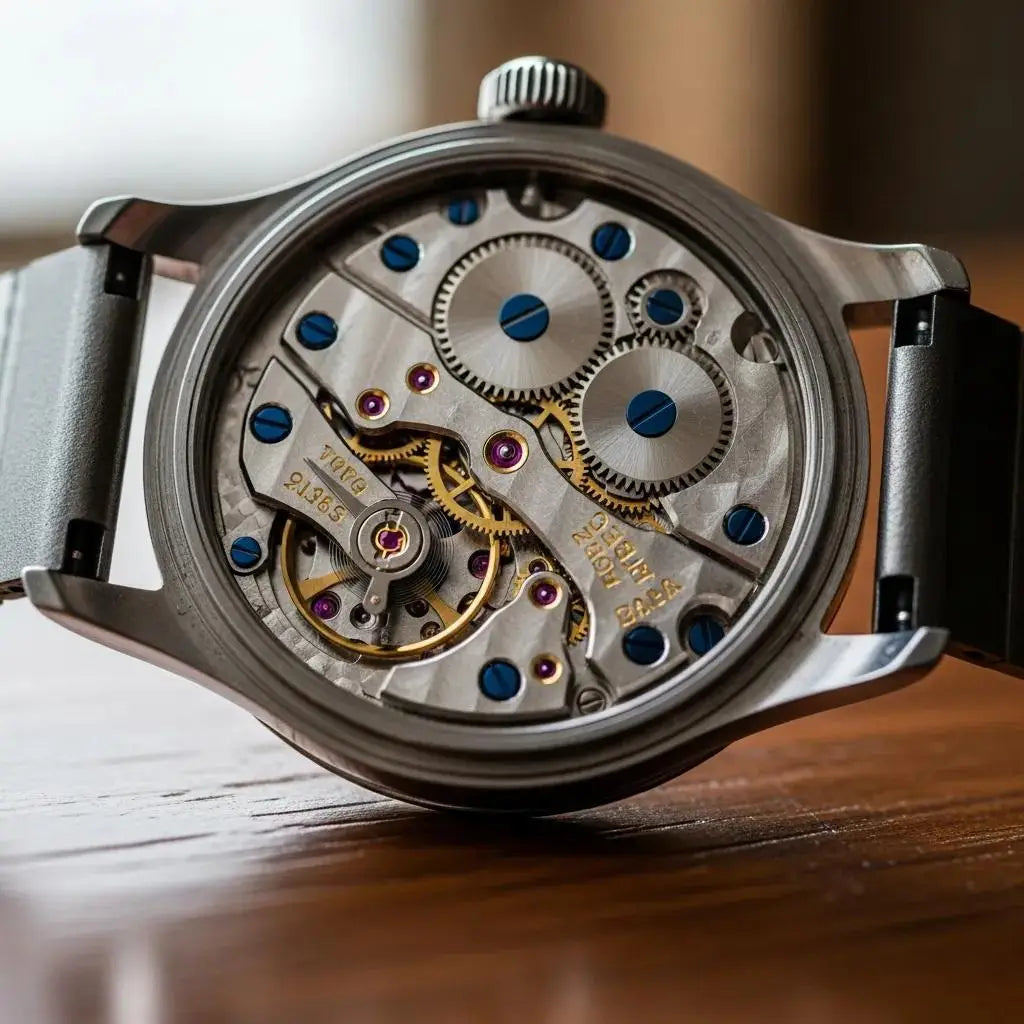
Mechanical watch movements are the engineered heart of traditional timepieces, converting stored mechanical energy into the steady motion that drives hands and complications. Understanding the difference between manual wind watches and automatic, self-winding watches clarifies not only how each mechanism functions but also which movement best matches your lifestyle, case design preference, and long-term ownership goals. This article explains core components like the mainspring, gear train, escapement, balance wheel, and rotor, then compares winding methods, thickness implications, and maintenance needs to help readers make informed purchases. You will learn how automatic rotors harvest wrist motion, why collectors prize hand-wound calibers for their slim profiles and ritual, and practical care routines to extend accuracy and longevity. The guide also maps movement choices to wearer personas, reviews historical innovations that shaped modern calibers, and provides tables and step-by-step lists to make technical concepts scannable and actionable.
What Are Mechanical Watch Movements and How Do They Work?
A mechanical watch movement is a collection of precision parts that turns the energy stored in a wound mainspring into regulated, periodic impulses that advance the hands; the mechanism’s job is to measure and release energy in a controlled way to keep time accurately. At its core, a mainspring stores potential energy, the gear train transmits that energy toward timekeeping elements, and the escapement with balance wheel meters its release to create the steady “tick” that defines rate and accuracy. Understanding these relationships helps buyers evaluate specifications like power reserve and beat rate, and it explains why movement finishing, jewel count, and regulation matter to performance. The following subsection clarifies the movement/caliber concept and measurable specs that affect daily wear.
What Is a Watch Movement and Its Role in Timekeeping?
A watch movement, often called a caliber, is the engineered engine that powers a timepiece by converting stored energy into controlled mechanical motion, moving hands and powering complications like date and chronograph functions. The movement’s frequency, usually expressed in beats per hour or hertz, determines how smoothly the seconds hand sweeps and how finely the escapement divides time; higher beat rates can improve short-term accuracy but may increase wear. Power reserve describes how long a fully wound mainspring will run before stopping, which in practice influences how often a manual watch must be wound or how long an automatic can rest off the wrist. Recognizing these core metrics helps prospective owners match a movement’s behavior to daily routines and maintenance tolerance, leading naturally to a closer look at the parts that make these functions possible.
Which Key Components Make Up Mechanical Movements?
Mechanical movements consist of a handful of interdependent components that together control energy storage, transmission, and release, each contributing to accuracy and durability. The mainspring stores energy, the barrel houses the mainspring and governs power reserve, the gear train transmits torque to the escapement, the escapement and balance wheel regulate the release of energy into precise intervals, and jewels reduce friction at pivot points to enhance longevity. Below is a compact EAV-style table that defines these parts and their roles for quick reference and comparison.
Different movement components perform distinct roles that influence performance and servicing needs.
| Component | Function | Notes |
|---|---|---|
| Mainspring | Stores mechanical energy | Determines power reserve length |
| Gear Train | Transmits torque | Connects barrel to escapement and hands |
| Escapement | Regulates energy release | Works with balance wheel for accuracy |
| Balance Wheel | Oscillates to divide time | Beat rate affects smoothness and precision |
| Jewels | Reduce friction at pivots | Increase durability and reduce wear |
This table clarifies how each part contributes to timekeeping and why component quality affects a movement’s character and service intervals.
How Do Automatic Watch Movements Operate and What Are Their Benefits?
Automatic watch movements use a rotating weight called a rotor to convert the wearer’s wrist motion into winding energy for the mainspring, enabling continuous operation without daily manual winding. The rotor swivels on a bearing and, through an oscillating winding system, tensions the mainspring as the wearer moves, while the gear train and escapement continue their regulated transfer of energy to keep time. Automatic calibers commonly include mechanisms to prevent overwinding and can offer multi-day power reserves, but they also tend to increase case thickness and add parts that require periodic servicing. Below, the role of the rotor and practical pros and cons are explored to help readers weigh convenience against design and maintenance trade-offs.
What Is the Role of the Rotor in Self-Winding Watches?

The rotor is a semi-circular weight that pivots with wrist movement to wind the mainspring automatically, making it the defining component of an automatic or self-winding watch. Rotors can be full, skeletonized, or micro-rotor styles, and can be made from materials ranging from brass to tungsten or precious metals to influence inertia and winding efficiency; higher-mass rotors typically wind more effectively on low-motion wearers. An exhibition caseback or skeleton automatic watch lets owners observe the rotor in action and can be a selling point for buyers who value visible mechanics and finishing. Understanding rotor types and materials helps buyers anticipate winding behavior and how visible movement elements factor into aesthetic and performance choices.
The rotor's function is central to how automatic watches maintain their power reserve through the wearer's daily activities.
Self-Winding Mechanical Watches: Rotor and Mainspring Function
In mechanical self-winding movement, the center-anchored Rotating Weight rotates about its axis with physical motions of the hand. It thereby winds the mainspring only when worn and stops during lay-offs. A watch winder re-creates the physical motions to maintain the beat in the caliber, when not worn.
Attiny85 controlled watch winder for self-winding mechanical watches, M Thothadri, 2022
What Are the Advantages and Limitations of Automatic Movements?
Automatic movements deliver hands-free convenience and keep watches running through regular wear, reducing the need to reset time and date daily, but they introduce additional moving parts that can affect thickness and long-term maintenance. The key advantages include continuous operation while worn, generally better suitability for daily routines, and compatibility with complications that benefit from steady power. Limitations include greater case thickness due to the rotor, increased servicing complexity over long periods, and potential inefficiency on users who rotate many watches and leave individual pieces unworn. Practical solutions such as watch winders and scheduled servicing mitigate many limitations and help owners maintain accuracy and value.
Automatic movements combine convenience with engineering complexity, which leads naturally into how efficiency varies by rotor type and specific design choices detailed below.
Different rotors and winding approaches have measurable effects on how quickly and reliably a watch stays wound.
| Rotor Type | Winding Direction | Typical Efficiency |
|---|---|---|
| Full Rotor | Bi-directional or uni-directional | High on average due to larger mass |
| Micro-Rotor | Bi-directional | Moderate; preserves slim profile |
| Skeletonized Rotor | Bi-directional | Moderate; balances aesthetics and mass |
This table highlights trade-offs: full rotors favor efficiency while micro-rotors prioritize thinness and design, and skeletonized rotors balance visibility with winding performance.
What Defines Manual Wind Watches and Why Choose Them?
A manual wind watch requires the wearer to rotate the crown periodically to tension the mainspring, providing a tactile ritual that connects owner and timepiece while enabling slimmer case profiles. Hand-wound calibers omit the rotor, which reduces thickness and allows designers to create elegant, dress-oriented watches with exhibition casebacks that showcase fine finishing and movement architecture. Owners often appreciate the ritual and intimacy of winding, the reduced parts count that simplifies servicing, and the aesthetic purity of a thin movement; however, daily or regular winding is required to prevent stoppage and potential timing variance. The following subsections describe the winding process and weigh benefits and drawbacks so readers can determine whether ritual and slimness outweigh convenience needs.
How Does the Hand-Winding Process Power a Manual Watch?
Hand-winding a manual watch involves turning the crown to engage the winding stem, which transfers torque into the barrel to wind the mainspring and store potential energy for the gear train and escapement to release in regulated intervals. As the mainspring tightens, stored energy increases the torque available to the movement until the watch reaches its full power reserve; owners learn to feel the mainspring’s resistance and stop winding when resistance increases to avoid overwinding. Typical guidance is to wind at the same time daily for most manual watches to maintain consistent amplitude and accuracy, though specific power reserves vary by caliber. This tactile interaction fosters a deliberate ownership experience that naturally influences how collectors and daily wearers manage timepieces.
What Are the Benefits and Drawbacks of Manual Wind Watches?
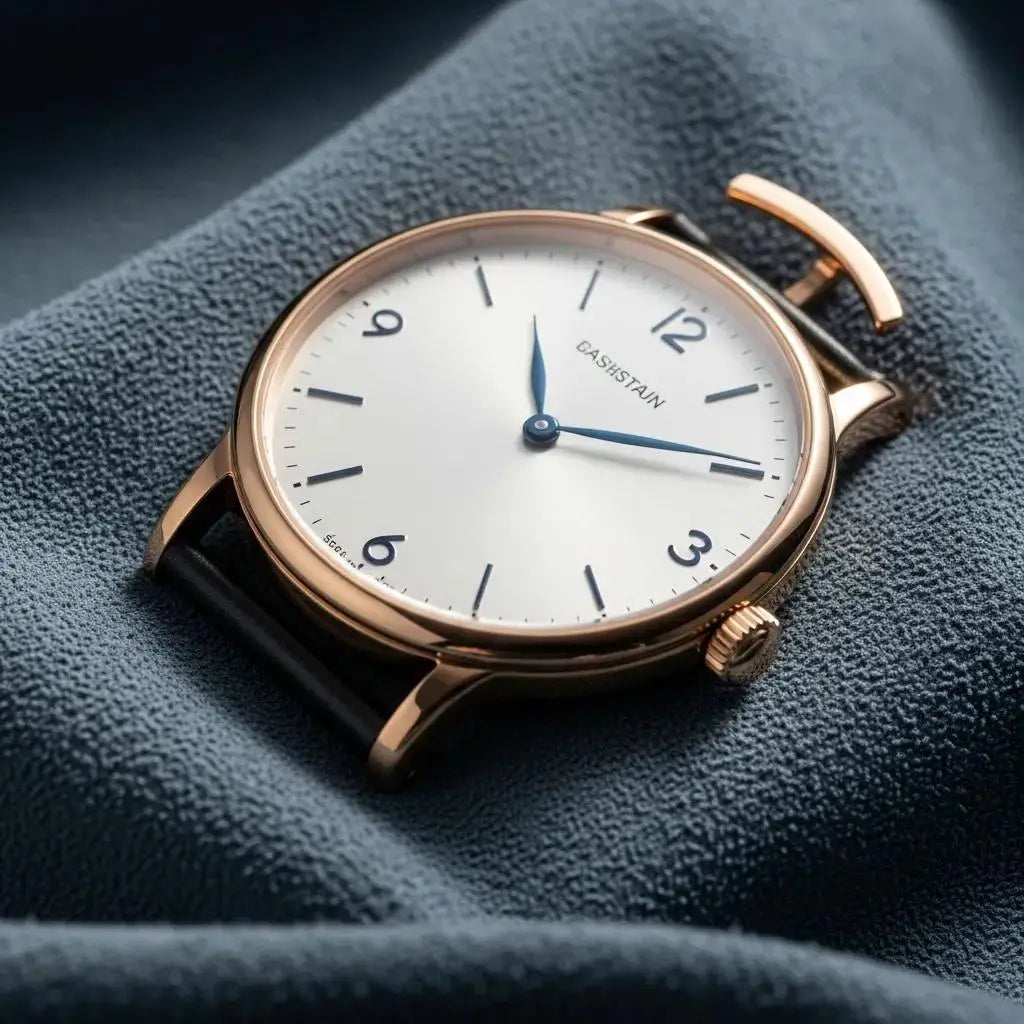
Manual wind watches offer intimacy, slimness, and a direct mechanical connection that many collectors value, but they demand routine winding and consistent wear to maintain timekeeping accuracy. Benefits include simplified movement architecture that can reduce service complexity, slimmer case design for dress watch aesthetics, and a ritual that deepens owner engagement with the watch. Drawbacks include the need for daily winding for many calibers, the possibility of inaccuracy if a watch is kept at low amplitude, and less convenience for wearers who prefer set-and-forget functionality. For those who appreciate tradition and design purity, the trade-off is often worthwhile; for busy daily wearers, automatic options or scheduled rotation may be a better fit.
Owners who want to explore curated automatic examples while keeping the educational context in mind should consider Dapper Watches' curated selection, which reflects a focus on minimalist and luxury styling. To provide a curated selection of watches and lead customers to discover and purchase products that enhance their style and make a statement. Dapper Watches highlights exhibition caseback and skeleton automatic options such as models from its 'Aquacarbon Pro' series and the 'The 199 Blue - Skeleton Automatic Luxury Watch' as illustrative examples of rotor-visible craftsmanship and modern finishing.
How Do Manual and Automatic Watch Movements Compare?
Comparing manual and automatic movements across winding, thickness, maintenance, and interaction clarifies which type aligns best with user habits and aesthetic priorities. Manual movements require active winding and typically produce thinner cases and a more deliberate ownership ritual, while automatics provide hands-free winding at the cost of added rotor-related thickness and complexity. Maintenance needs are similar in terms of interval servicing, but automatics may hide wear in the winding mechanism and rotor bearings that need attention; conversely, manual movements are often simpler to disassemble and service. The table below summarizes buyer-relevant attributes to support quick comparison and decision-making.
| Movement Type | Convenience | Typical Thickness | Ideal User |
|---|---|---|---|
| manual Wind | Requires daily winding | Slimmer cases | Dress watch lovers and collectors |
| Automatic | Self-winding with wear | Moderate to thicker cases | Daily wearers and those who prefer hands-off use |
| Skeletonized Automatic | Visible mechanics | Varies; often thicker | Enthusiasts who value visual movement detail |
This comparison clarifies that manual winders prioritize slimness and ritual, automatics prioritize convenience, and skeleton models trade thickness for visible finishing.
The following list maps common wearer personas to recommended movement choices, offering practical guidance for selection based on routine and preference.
- Daily commuter: An automatic movement is recommended because regular wrist motion maintains power without intervention.
- Dress watch collector: A manual wind watch suits formal, slim-profile designs and ritual appreciation.
- Rotation enthusiast: A mix of automatics and manuals works well; use a winder for automatics when off the wrist.
These persona-based recommendations help readers match movement types to daily habits and style goals, and the next section provides actionable care steps to keep either movement running well.
How Should You Care for and Maintain Mechanical Watches?
Proper care for mechanical watches begins with correct winding technique and extends to scheduled servicing and mindful storage to protect lubrication, regulate accuracy, and preserve resale value. Winding technique differs between manual and automatic watches: manual watches require regular crown turns to maintain amplitude, while automatics benefit from occasional manual winding after periods off the wrist and from watch winder use when part of a rotation. Environmental factors such as humidity, shocks, and magnetism affect movement components like the balance spring and escapement, so owners should plan periodic inspections and full services per manufacturer recommendations. The subsections below provide how-to steps and explain how maintenance affects longevity and value.
What Are Best Practices for Winding and Servicing Mechanical Watches?
Winding a manual watch should be done gently at a consistent time each day until you feel firm resistance, typically 20–40 half-turns depending on caliber, which tensions the mainspring without risking overwind; stop when resistance increases noticeably. For automatic watches, a few manual crown turns after inactivity will bring oil distribution back to optimal levels, and using a watch winder can maintain power reserve and lubrication when a watch sits unused for extended periods. Servicing intervals commonly fall between three and five years for most mechanical movements, covering cleaning, lubrication, and regulation; owners should choose qualified watchmakers familiar with the movement’s architecture. Regular, appropriate servicing preserves accuracy, minimizes wear, and supports long-term value retention.
Practical winding and servicing routines reduce the likelihood of mechanical failure and lead naturally to why these practices extend longevity.
Here is a simple numbered how-to list to guide safe winding and common maintenance actions.
- Wind at the same time daily for manual watches to maintain stable amplitude and predictable accuracy.
- Perform a light manual wind on automatics after extended rest to redistribute lubricants before wear.
- Schedule full servicing every 3–5 years with a qualified technician to replace oils and check wear.
Following these steps helps owners maintain precision and protects internal components from premature wear, setting up the next subsection on how care affects long-term value.
How Can Proper Care Extend the Longevity of Your Mechanical Watch?
Consistent care—regular winding, appropriate storage, and scheduled servicing—preserves a movement’s lubrication, reduces friction at jewel bearings, and maintains amplitude and accuracy, which directly extends wear life and resale value. Documented servicing creates a verifiable maintenance history that reassures future buyers and can materially affect a watch’s marketability; collectors often prize watches with complete service records. Environmental controls such as avoiding extreme temperatures, limiting magnet exposure, and storing watches in low-humidity conditions further protect balance springs and escapements from distortion and degradation. For owners seeking guidance or accessories, Dapper Watches supports the purchase journey and product upkeep by offering curated product selections and care resources that align with customer needs. To provide a curated selection of watches and lead customers to discover and purchase products that enhance their style and make a statement.
What Is the History and Craftsmanship Behind Mechanical Watchmaking?
The history of mechanical watchmaking traces innovations from the balance spring and lever escapement to automatic winding and modern materials, each advance improving accuracy, reliability, and wearability. Early improvements such as the introduction of the balance spring standardized oscillation rates, while the lever escapement provided durable, precise regulation; later innovations brought automatic winding and refined finishing techniques like Geneva stripes and perlage that elevated aesthetic value. Modern craftsmanship blends these historical techniques with contemporary machining, in-house calibers, and skeletonization to expose movement artistry, creating pieces that combine function and decorative finishing. This historical lineage explains why finishing, movement provenance, and visible mechanics influence collector appreciation and pricing.
What Key Innovations Shaped Mechanical Watch Movements?
Several breakthroughs—most notably the balance spring, lever escapement, and automatic winding—shifted mechanical watches from novelty timekeepers to accurate, wearable instruments suitable for everyday use. The balance spring defined timekeeping precision by restoring oscillations, the lever escapement standardized reliable energy release to the balance, and automatic winding removed the need for constant manual input, broadening appeal. Improvements in materials and machining during the 20th century increased durability and allowed thinner profiles and greater power reserves, while finishing techniques elevated movements into collectible objects. These innovations form the backbone of modern horology and directly inform current movement design choices and user expectations.
How Does Traditional Watchmaking Influence Modern Mechanical Watches?
Traditional artisanal techniques such as hand-finishing, Geneva stripes, anglage, and perlage persist in modern watchmaking because they signal craftsmanship, validate attention to detail, and create collectible desirability beyond raw specifications. Finishing techniques not only beautify visible bridges and rotors but also indicate the level of manual labor and skill invested in a movement, which collectors use to assess value and provenance. Contemporary brands and curators combine these methods with modern manufacturing to balance cost, reliability, and aesthetic appeal; for example, skeleton automatic watches display both finishing and functional components to engage buyers visually and technically. As a curator focused on minimalist and luxury men's watches, Dapper Watches aligns its styling and selection philosophy with these traditions to help customers find pieces where craftsmanship and design cohere. To provide a curated selection of watches and lead customers to discover and purchase products that enhance their style and make a statement.
0 comments