


Gold Watch for Men: Essential Tips and Best Practices for Lasting Shine and Performance
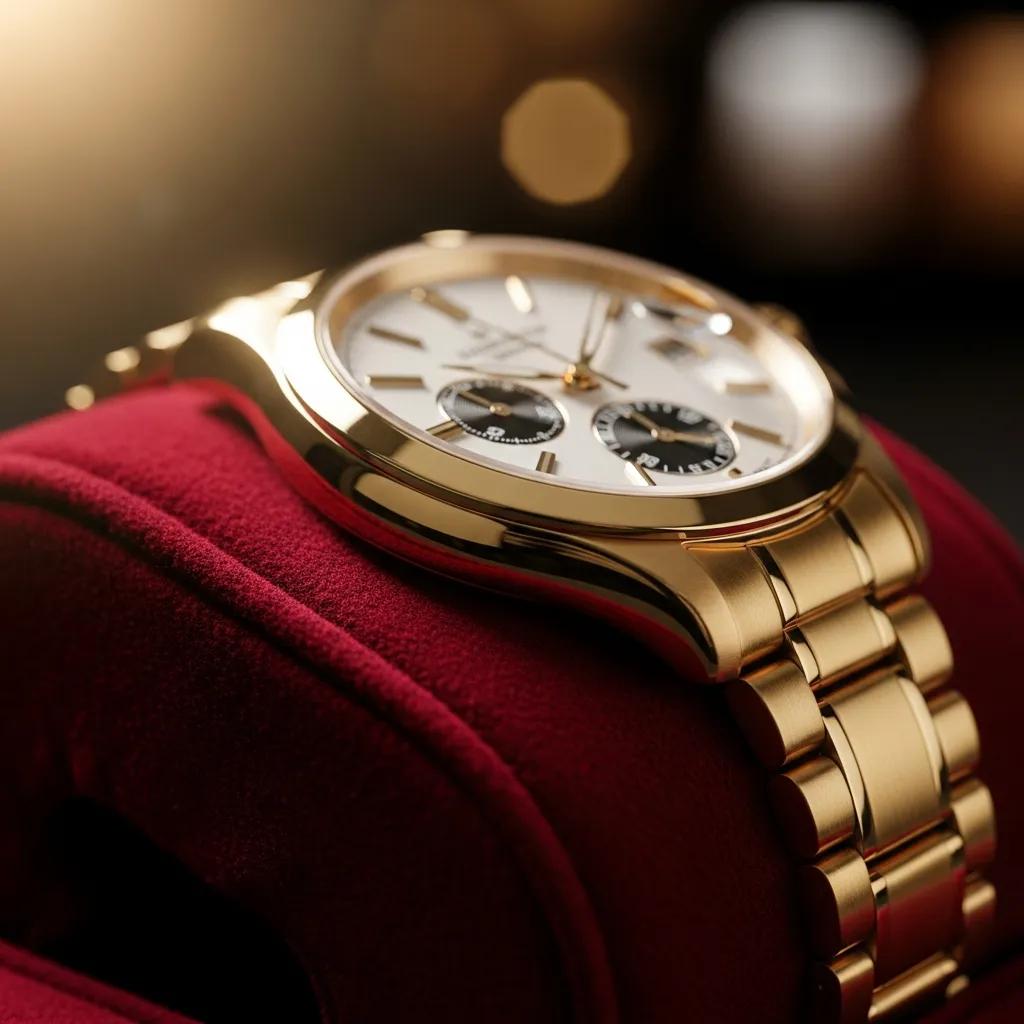
A gold luxury watch is both a precision instrument and a wearable piece of jewelry that reflects personal style and value, and caring for it properly preserves both its appearance and mechanical performance. This guide explains why deliberate maintenance—cleaning routines, tailored storage, scratch management, water-resistance awareness, and periodic professional servicing—matters for solid gold, gold-alloy and gold-plated timepieces. You will learn practical, evidence-based steps for daily quick care, periodic deep cleaning, and when to choose DIY polishing versus professional refinishing, all informed by metallurgy differences and modern anti-tarnish technologies. The article maps a concise routine for cleaning frequency, details safe materials and step-by-step cleaning for bracelets and cases, outlines tarnish prevention by gold type, and gives quantified storage and humidity guidance. It also decodes water-resistance ratings for everyday decisions and explains service intervals that keep movements reliable and gaskets watertight. Throughout, semantic guidance and decision checklists help you match maintenance actions to your watch’s karat, plating status, wear pattern and environment.
How Often Should You Clean Your Gold Luxury Watch to Maintain Its Shine?
Regular cleaning is a layered practice: a daily quick wipe prevents abrasive grime build-up, periodic deeper cleaning removes accumulated oils and contaminants, and professional attention addresses movement and finish issues that home methods cannot safely fix. Daily wiping with a soft, lint-free microfiber cloth removes sweat, skin oils and light dust that accelerate tarnish and wear on bracelet links and case surfaces. Every three to six months perform a careful at-home cleaning for solid and high-karat pieces that are water-resistant, and reduce frequency for plated or vintage items to avoid wearing through thin layers. In all cases, avoid abrasive pads or harsh chemicals that can remove plating and harm seals, and consider an annual inspection for gaskets and pressure testing if you wear the watch near water. These time-based practices set the stage for selecting safe cleaning materials and executing an effective step-by-step cleaning routine.
What Are Safe Cleaning Materials for Gold Watches?
Safe cleaning materials prioritize gentle action and non-reactive chemistry to preserve both gold surfaces and movement seals, with the main items being a high-grade microfiber cloth, a soft-bristled brush, and a mild, phosphate-free soap. Microfiber cloths capture oils and microscopic grit without scratching; soft brushes (nylon or natural hair) dislodge debris from bracelet links and crevices while avoiding surface abrasion. A dilute mild soap—such as baby shampoo or a pH-neutral dish soap—cleans without stripping oils or reacting with gold alloys; avoid ammonia, bleach, acetone and abrasive pastes that remove plating or dull polished finishes. For plated watches, restrict liquid exposure and use only a dry microfiber wipe or a barely dampened cloth with immediate drying, since plating is thin and more prone to wear. Understanding each material’s role helps you choose the right tool for daily maintenance versus periodic cleaning, which leads to a safe, repeatable step-by-step routine.
How to Clean Gold Watch Bracelets and Cases at Home Step-by-Step
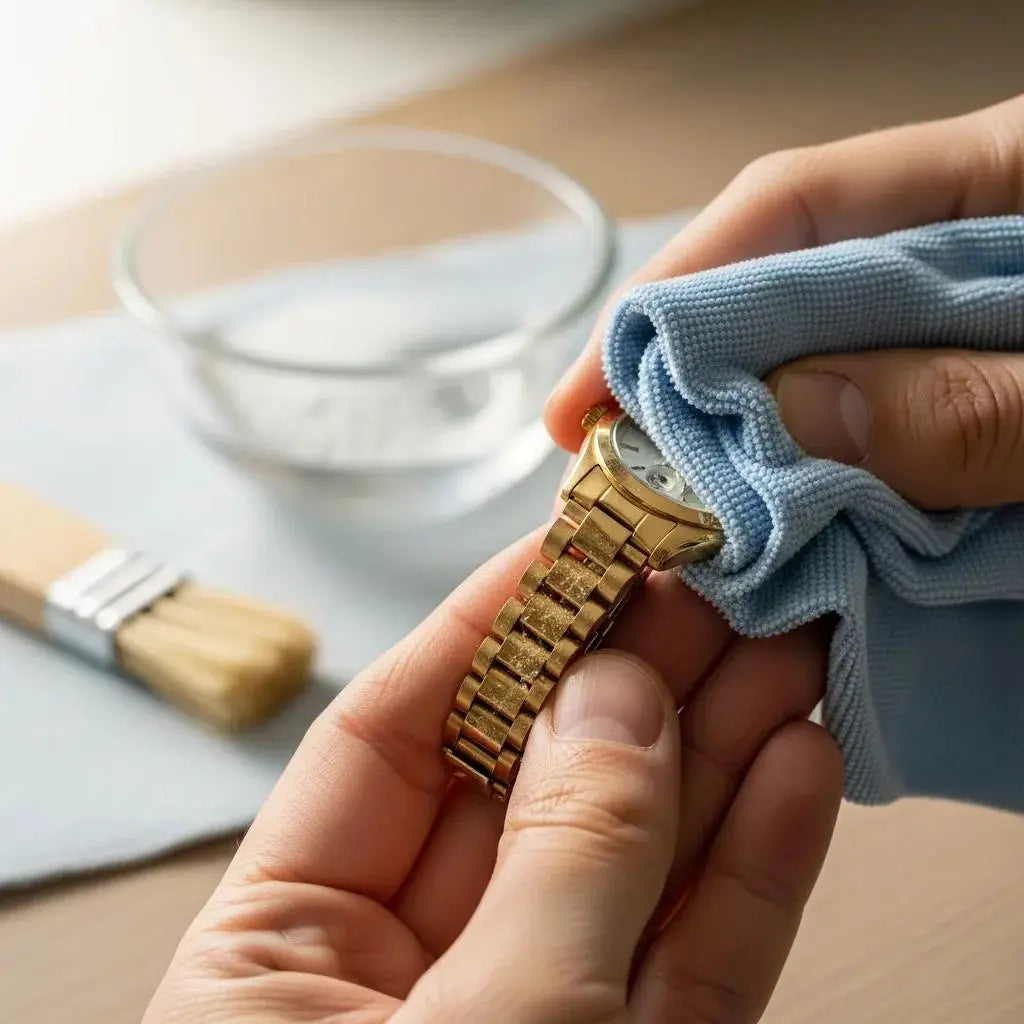
A clear, numbered routine minimizes risk: gather materials, disassemble removable straps when appropriate, clean gently, rinse carefully, and dry thoroughly to protect both metal and movement.
Materials needed: soft microfiber cloth, soft-bristled toothbrush, small bowl, mild soap, distilled water, toothpicks or wooden sticks for crevices, and a soft towel for drying.
- Remove straps if leather or fabric
- Make a mild soap solution and dip the brush, brushing links and case gently
- Rinse with a small stream of distilled water or wipe with a damp cloth for non-immersion items
- Pat dry immediately, use compressed air sparingly for lug holes, and finish with a microfiber buff to restore shine
For non-water-resistant or heavily plated watches, skip immersion and use dampened cloths only; for leather straps, avoid soap—clean with recommended leather care and allow air-dry. Following a methodical sequence reduces the risk of moisture ingress and prepares the watch for proper storage or additional polishing if needed.
What Are the Best Practices to Prevent Tarnish on Your Gold Watch?
Tarnish prevention begins with understanding the chemistry: gold alloys tarnish differently because of their metal content, and exposure to moisture, chemicals and pollutants accelerates surface discoloration or patina formation. Basic preventive habits—wiping after wear, minimizing exposure to perfumes and pool chemicals, and storing in low-humidity, anti-tarnish environments—slow the oxidation processes that affect alloys and base metals in plated items.
Using anti-tarnish strips in storage and controlling humidity with silica gel packets reduces electrochemical reactions that promote tarnish, while periodic gentle cleaning removes contaminants before they react. When tarnish is heavy or plating degrades, professional intervention for safe refinishing is often preferable to aggressive DIY polishing, which risks material loss. These prevention strategies are informed by how karat grade and plating influence susceptibility, which the following table compares to help you match care steps to your watch’s metallurgy.
Different gold types show distinct susceptibility to tarnish and need tailored prevention steps.
| Gold Type | Tarnish Susceptibility | Recommended Prevention Steps |
|---|---|---|
| 24K / High-purity gold | Low chemical reactivity; softer, prone to scratches | Gentle daily cleaning; store padded; avoid abrasive polishing |
| 18K gold (alloyed) | Moderate; balanced hardness and purity | Wipe after wear; periodic mild cleaning; avoid chlorinated pools |
| 14K gold (more alloy content) | Higher: more base metals that can oxidize | Control humidity; anti-tarnish strips; gentle cleaning 3–6 months |
| Gold-plated / PVD | High: plating can wear revealing base metal | Avoid abrasive cleaners; limit polishing; use dry wipes; professional replate when needed |
This comparison clarifies why care routines differ: higher karats resist chemical changes but scratch more easily, while lower-karat and plated pieces need gentler handling and more protective storage. Recognizing these differences informs choices about cleaning frequency and whether to pursue at-home methods or professional refinishing.
How Do Gold Alloys Affect Tarnish and Care Requirements?
Gold alloys mix gold with other metals (copper, silver, nickel) to increase durability and change color, and those additional metals determine tarnish tendencies and appropriate maintenance. Higher-karat gold contains more pure gold and fewer reactive alloys, so it resists chemical discoloration but is softer and more susceptible to surface scratches that show as wear. Lower-karat items (14K) contain more base metals that oxidize or react to sulfurs in air, so they benefit from tighter humidity control and anti-tarnish storage. Plated watches have a thin gold layer over a base metal and require the most conservative approach: dry wiping, minimal liquid exposure and avoidance of polishing compounds that strip plating. Aligning cleaning and storage choices to alloy composition minimizes both chemical tarnish and mechanical wear, guiding whether to use polishing cloths or seek professional refinishing.
Gold's Role in Watchmaking: Aesthetics, Durability, and Functionality
The attractive colour of gold, its brightness, durability as well as its tarnish and corrosion resistance made it the choice material for watch cases, from the earliest ‘onion’ of the 16th century to today's multi-motor quartz wrist chronograph. But the use of gold was never just limited to the case and other visible parts. Fire gilding was used in the earliest watches to protect baseplate, bridges and gears from tarnishing and corrosion. In order to give the watch the highest possible value linked with aesthetics and functionality, most (but not all) watch parts have been made of gold alloys at one time or another or have been gold plated. Gold is purely functional as a brazing compound; it is indispensable for chip bonding, wiring and frequency adjustment in electronic watches.
Gold in watchmaking, 2000
Which Environmental Factors Cause Tarnish and How Can You Avoid Them?
Environmental contributors include humidity, sweat salts, chlorine and sulfur-containing compounds in the air, and household chemicals; quantifying risk helps craft preventive steps. Relative humidity above roughly 50% increases corrosion risk for alloys and encourages tarnish; aim to store watches at 30–50% relative humidity and moderate temperatures to preserve gaskets and finishes. Sweat and body oils contain salts and acids that accelerate chemical reactions—wiping after wear removes these catalysts—while chlorine from pools and bleach damages both gaskets and finishes. Airborne pollutants in urban settings (sulfur compounds) can darken lower-karat items, so anti-tarnish strips and sealed storage become important. Implementing humidity control, prompt cleaning after exposure, and avoiding contact with aggressive chemicals largely prevents environmental tarnish, which leads naturally to storage strategies that control these factors.
Tarnish and Corrosion Resistance of Gold Alloys in Jewelry
Tarnishing, corrosion and stress corrosion cracking (SCC) of gold alloys are related phenomena. They present problems when they occur in gold jewellery, dental gold alloys and electronic devices. They are exploited, however, in the depletion gilding and finishing of gold jewellery; and in the extraction, refining and fire assaying of gold. There is still much that is not known about these phenomena, but a coherent picture of their mechanisms is emerging as a result of studies of not only gold alloys themselves, but also of other alloys. Aspects of this development are discussed.
Tarnish resistance, corrosion and stress corrosion cracking of gold alloys, 1996
How Should You Store Your Gold Luxury Watch to Protect It from Damage?
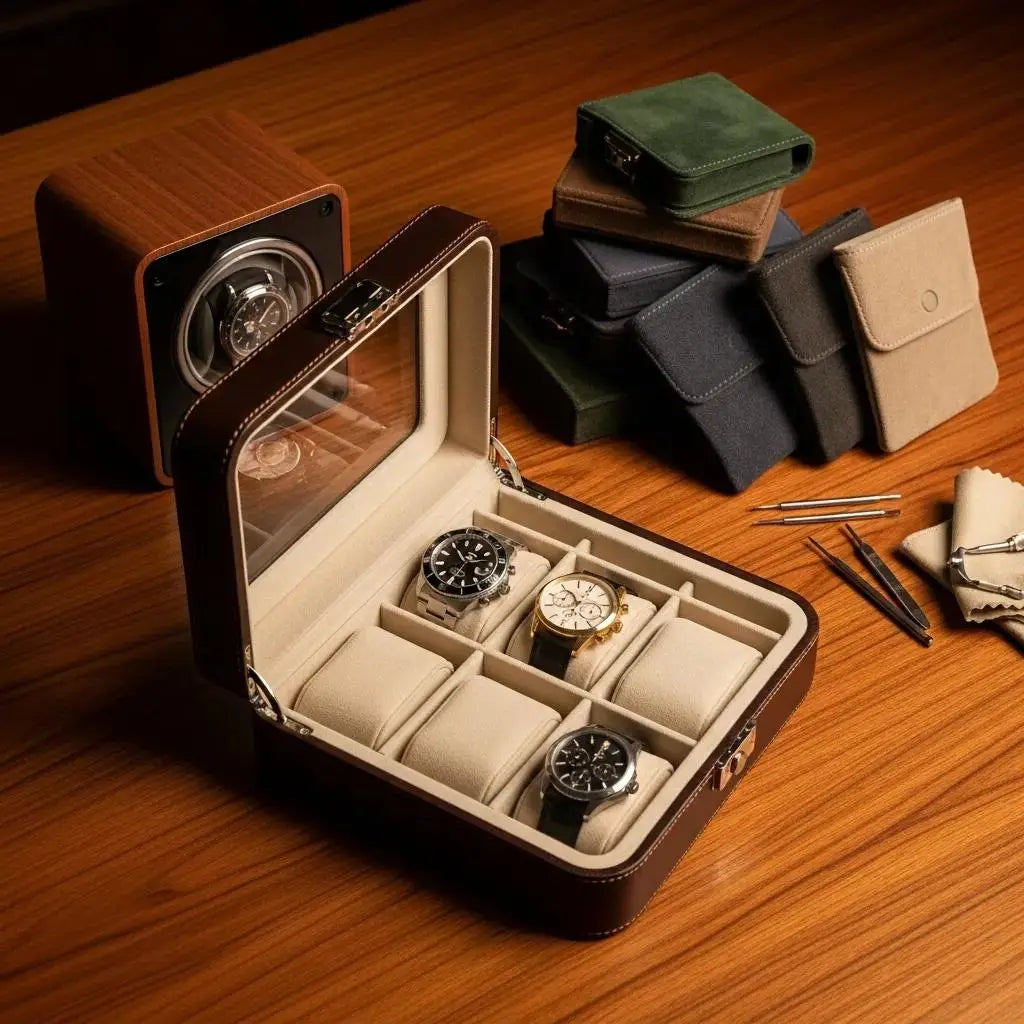
Appropriate storage balances protection from scratches, control of humidity and temperature, and, when applicable, maintaining automatic movement function without overwinding. Primary options include padded watch boxes for long-term storage, watch winders for daily-worn automatics, soft pouches for short-term transport, and safes for security—each offering different protections against physical and environmental risks. Ideal ambient storage conditions are moderate temperature (roughly 15–25°C) and relative humidity between 30–50% to avoid gasket degradation and metal corrosion; use silica gel packets and anti-tarnish strips in boxes to manage moisture and airborne sulfurs. Magnetic fields near electronics can affect timekeeping, so keep watches away from strong magnetic sources and check recommended practices for winders to avoid unnecessary motion. These storage principles clarify decision factors for choosing a box, winder or pouch and introduce the trade-offs that inform a purchase choice.
What Are the Benefits of Using Watch Boxes and Watch Winders?
Watch boxes offer padded, separated compartments that prevent contact between watches and limit exposure to dust and airborne contaminants, while winders keep automatic movements running and lubricated during daily rotation. Boxes minimize scratches and tangling by isolating pieces and provide room for silica packets and anti-tarnish strips; they are the simplest solution for short- to long-term storage when movement winding is unnecessary. Winders maintain rotor motion and prevent lubricants from settling in older automatics, which can be helpful for daily drivers, but they should be used judiciously: incorrect rotation settings or excessive motion can accelerate wear or over-wind certain movements. Choose a box for multi-watch storage and a calibrated winder for select automatic pieces—both require periodic inspection and humidity control to preserve seals and finishes. Understanding these benefits helps match storage hardware to watch type and ownership patterns.
How Do Humidity and Temperature Control Impact Watch Storage?
Humidity and temperature directly affect gaskets, lubricants and metal behavior: elevated humidity speeds corrosion of alloy components and promotes gasket swelling, while extreme temperatures can thicken or thin lubricants and shift timekeeping characteristics. Aim for steady room-temperature conditions around 15–25°C and relative humidity near 30–50% to minimize gasket degradation and reduce corrosion risk; use silica gel packets to absorb moisture spikes and anti-tarnish strips to neutralize sulfur compounds. For long-term storage, keep watches in a dark, ventilated space to avoid UV exposure that can fade dials and straps, and monitor safes for internal humidity. Choosing storage solutions with humidity control features and replacing desiccants periodically protects both mechanical function and metal finishes, leading naturally to practical product choices for those who prefer curated solutions.
How Can You Safely Remove Scratches from Your Gold Watch?
Scratch removal depends on depth and location: light surface scuffs can often be mitigated with a polishing cloth or non-abrasive pastes, while deeper scratches, gouges or worn plating require professional refinishing to avoid material loss and maintain value. Light polishing with a high-quality, non-abrasive jeweler’s cloth can restore shine on polished surfaces if done gently and sparingly; for brushed finishes, using appropriate abrasive pads and directionality is critical and best left to experienced hands. Over-polishing removes microscopic layers of metal and can change case geometry or thin plating, so stop when the scratch lessens rather than disappears completely. When scratches cross edges, expose base metal, or affect engraving, seek a professional who can assess whether re-polishing or replating is the correct remedy. Recognizing when to apply home remedies versus seeking expert care prevents irreversible material loss and preserves both appearance and resale value.
What Are Effective DIY Techniques for Minor Scratch Removal?
Minor scratch removal relies on minimal material removal and direction-consistent polishing to blend scuffs without altering shape: use a gentle jeweler’s polishing cloth, light circular motions, and minimal pressure to treat polished surfaces. For bracelets, clean first to remove grit, then use the cloth to buff along the surface until the scuff diminishes; for brushed finishes, use a fine abrasive pad that matches the grain direction, moving uniformly to maintain finish consistency. Non-abrasive polishing pastes can help but apply them sparingly and test on an inconspicuous area first; always avoid rotary tools unless you have training, as they remove material quickly. Stop as soon as the scratch becomes less visible; if the scratch remains deep or the finish changes unevenly, pause and consult a professional to avoid irreversible damage. This pragmatic DIY approach reduces visible defects while preserving metal volume and finish integrity.
When Should You Seek Professional Gold Watch Scratch Repair?
Professional intervention is warranted when scratches are deep, cross sharp edges, expose base metal or plating, or when precision finishes must be matched across the case and bracelet. Professionals can perform controlled polishing, refinishing, and replating with the right abrasives, polish compounds, and electroplating equipment, returning uniform surface geometry and finish without excessive material loss. Seek a watchmaker or authorized refinisher if the scratch affects the bezel, crystal seating, or if your watch has a lacquered dial, complex case shapes, or vintage value that requires preservation of original surfaces. Expect professionals to evaluate depth, recommend refinishing or replating, and provide timelines and cost estimates; this expertise preserves value and ensures that repairs are reversible or documented for provenance. Choosing a reputable specialist protects both aesthetic and mechanical integrity, and knowing when to refer prevents costly over-polishing mistakes at home.
What Does Water Resistance Mean for Your Gold Luxury Watch Care?
Water resistance describes a watch’s ability to withstand pressure from water and moisture, expressed in ATM (atmospheres) or meters, and it determines which water-related activities are safe and which require extra precautions. Ratings are not permanent: seals (gaskets) age and wearing the crown while submerged can allow water ingress, so periodic pressure testing and gasket replacement are key maintenance actions. After any water exposure—especially saltwater—rinse with fresh water, dry thoroughly, and have seals inspected if you notice moisture or condensation under the crystal. Understanding rating limitations and following basic pre- and post-exposure steps helps avoid water damage that can harm both movement and finishes, and informs decisions about when to remove your gold watch for activities like swimming or showering.
| Rating (ATM / m) | Typical Safe Activities | Care Precautions |
|---|---|---|
| 3 ATM / 30 m | Hand washing, light rain only | Avoid submersion; check crown sealed; no hot showers |
| 5 ATM / 50 m | Showering, surface swimming (brief) | Rinse after exposure; avoid soap/chemicals; test seals regularly |
| 10 ATM / 100 m | Recreational swimming, snorkeling | Rinse after saltwater; pressure-test annually if used frequently |
| 20 ATM / 200 m+ | Diving and professional water sports | Regular pressure testing; service gaskets more often; follow manufacturer specs |
This mapping clarifies that "water-resistant" is activity-specific and that maintenance like gasket replacement and pressure testing preserves that rating over the life of the watch. Proper post-exposure care and scheduled testing reduce the risk of moisture entry that damages both movement and metal finishes.
How to Decode Water Resistance Ratings for Gold Watches
Water-resistance labels reflect standardized pressure tests, but real-world use imposes thermal shock, crown misuse and chemical exposure that can negate ratings, so interpret labels conservatively. Use the table above as a quick reference: 3 ATM covers splashes, 5 ATM extends to brief swimming, 10 ATM suits snorkeling, and 20 ATM or higher supports diving with appropriate service. Remember that hot water and soaps can degrade seals and that crowns or pushers must be secured before exposure; if your watch is vintage or plated, prefer dryness to preserve finishes. Periodic pressure testing—especially after battery changes or gasket replacement—confirms that the seals still perform to specification, helping you decide whether to wear the watch near water or reserve it for dry activities. Decoding ratings this way supports safer use and informed maintenance timing.
What Precautions Should You Take When Exposing Your Gold Watch to Water?
Before any water exposure, ensure the crown is fully screwed down and avoid engaging pushers underwater, then rinse with fresh water after exposure and dry promptly to prevent salt or chlorine residue from accelerating corrosion. For saltwater immersion, immediate freshwater rinsing prevents salt crystallization and corrosion on bracelet links and case joints, and for chlorinated pools, minimize exposure and rinse thoroughly to protect finish and gaskets. If condensation appears under the crystal after submersion, stop wearing the watch and consult a watchmaker promptly to prevent movement damage. Regularly replace gaskets and have pressure testing done after repairs or battery changes to maintain the water-resistance rating and protect both movement and gold surfaces from moisture-related harm.
Why Is Professional Servicing Important for Maintaining Your Gold Luxury Watch?
Professional servicing preserves both timekeeping accuracy and long-term value by addressing movement lubrication, gasket integrity, and safe aesthetic refinishing that home maintenance cannot replicate. A full service typically includes disassembling the movement, cleaning components, replacing worn parts, re-lubrication, gasket replacement and pressure testing, and when appropriate, controlled polishing or refinishing that respects case geometry and plating thickness. Regular service intervals prevent abrasive wear inside the movement, ensure water resistance is maintained, and allow specialists to detect early issues such as worn pivots or compromised plating before they escalate. Entrusting periodic overhauls to trained technicians protects mechanical precision and ensures aesthetic interventions are performed without over-polishing, which preserves provenance and resale value. Understanding typical service components sets expectations for timelines and outcomes and clarifies when earlier intervention is necessary based on symptoms.
How Often Should You Schedule Watchmaker Checks and Overhauls?
Recommended intervals vary by movement type, usage intensity and environmental exposure: routine checks annually and complete overhauls every three to five years are common baselines, with more frequent servicing for vintage pieces or watches regularly used in harsh conditions. Automatic watches that are worn daily may benefit from inspection once a year to verify lubricants and gaskets, while quartz watches may need less frequent mechanical servicing but still require seal checks after battery changes. Signs that warrant earlier service include irregular timekeeping, moisture under the crystal, unusual noises, or difficulty winding—these indicators point to lubrication breakdown or mechanical wear. Tailoring intervals to your watch’s movement and wear pattern preserves accuracy and prevents costly repairs that arise when maintenance is deferred.
What Are the Benefits of Expert Maintenance for Gold Watches?
Expert maintenance restores mechanical reliability, verifies water resistance, and performs safe aesthetic work that preserves case geometry and plating thickness, thereby protecting both function and value. Professionals use appropriate abrasives, controlled polishing techniques and, when necessary, replating services to match original finishes without excessive material removal; they also document service history which helps provenance and resale. Regular expert checks prevent minor issues from becoming catastrophic, ensure lubricants perform as intended, and keep gaskets fresh enough to protect against moisture intrusion. For owners balancing aesthetics and mechanical health, professional servicing is an investment in longevity that complements daily care routines and keeps collectible and wearable value intact.
- Check for timing irregularities or moisture: If present, book a professional inspection promptly.
- Prefer documented services: Professional reports preserve resale value and warranty conditions.
- Balance frequency with usage: Heavier wear and water exposure justify earlier overhauls.
- Daily habit: Wipe watch with a microfiber cloth after each wear to remove oils and salts.
- Periodic at-home clean: For water-resistant watches, deep clean every 3–6 months.
- Professional interval: Schedule routine checks annually and full overhauls every 3–5 years unless symptoms arise.
0 comments